Welcome to LAIXL, producing EL testers, IV testers, and drone EL
 ×
×
+86 177-0622-2370
xinwen
浏览数:696 发布于:2026-06-18
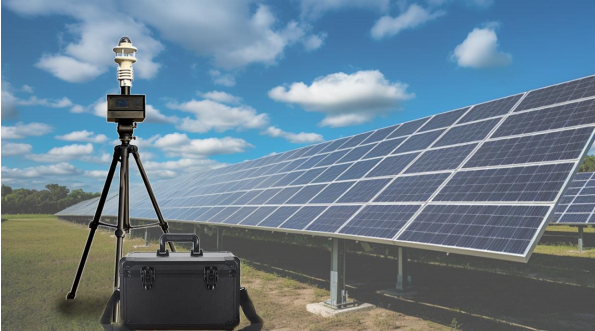 The efficiency of photovoltaic power generation is highly correlated with the meteorological environment. Meteorological factors such as solar irradiance, ambient temperature, component back panel temperature, wind speed and direction, rainfall, atmospheric pressure, and air humidity directly determine the real-time power generation of the power station, component attenuation rate, and equipment failure probability. Traditional fixed photovoltaic weather stations have long installation cycles and cannot be moved. There are many monitoring blind spots in mountainous areas, distributed scattered power stations, and multi array comparative testing scenarios. Operation and maintenance personnel cannot accurately distinguish whether fluctuations in power generation are caused by changes in the meteorological environment or equipment failures. Power generation prediction and operation and maintenance plan formulation rely on long-term experience judgment and lack quantitative data support. Suzhou Laikesi LAILX focuses on the mobile environmental monitoring needs of photovoltaics, and has developed the LXH506 portable weather station, which integrates integrated multi-element weather sensors, wireless IoT transmission, large capacity local storage, and long endurance power supply system. It is lightweight and quickly deployable, and can be flexibly deployed to any photovoltaic monitoring point to collect a complete set of photovoltaic specific meteorological data in real time, providing accurate environmental data support for power generation accounting, fault diagnosis, power station optimization, and project evaluation. Portable weather station
The LXH506 is equipped with LAILX's self-developed integrated intelligent meteorological sensing module, which uses non mechanical loss ultrasonic wind measurement, tipping bucket rainfall, and high-precision irradiation sensing core components to avoid the defects of traditional mechanical sensors such as wear, lag, and large measurement errors. A single device synchronously collects six core meteorological parameters, including total solar irradiance, environmental temperature and humidity, wind speed, wind direction, rainfall, and atmospheric pressure. The supporting external component temperature probe can synchronously collect the temperature of the photovoltaic back panel, fully covering all environmental monitoring indicators related to photovoltaic power generation. The wind speed and direction sensor has no moving parts and can accurately measure the full range from 0 to 60m/s. It covers the wind direction from 0 to 360 ° and has a measurement accuracy of ± 3 °; The solar irradiance sensor has undergone professional optical calibration to accurately capture the intensity of direct and scattered light, with errors controlled within the industry's high standard range; The measurement range of the rain sensor is 0 to 500mm/h, and the rainfall duration and accumulated rainfall are accurately recorded, so that the operation and maintenance personnel can evaluate the dust removal effect of the rain wash components and the impact of rainstorm ponding on the power plant equipment; The temperature, humidity, and air pressure sensors have strong resistance to environmental interference, and can stably output accurate data in high humidity, sand and dust, and high and low temperature environments for a long time, providing reliable raw data for photovoltaic efficiency conversion.
The lightweight and rapid deployment design of the equipment is the core portable advantage of LXH506. The entire set of meteorological sensing host, high-strength telescopic tripod, and protective storage box are integrated, and can be set up and debugged on site in 5 minutes by a single person. There is no need for civil construction or fixed base, and monitoring points can be disassembled and transferred at any time, perfectly compensating for the shortcomings of fixed meteorological stations that cannot be moved. The sensor and host of the whole machine adopt IP66 industrial grade high protection level, and the operating temperature covers -30 ℃ to 70 ℃. It can operate stably for a long time in extreme outdoor environments such as extremely cold plateau, high temperature desert, southern plum rain and high humidity, coastal salt fog, rainstorm and strong wind. The sensor has built-in automatic calibration and fault self diagnosis programs, which can automatically correct measurement parameters regularly. When the equipment is abnormal, it can actively upload alarm information, greatly reducing the frequency of manual maintenance and calibration. The power supply system adopts a 12000mAh large capacity built-in lithium battery, which can continuously collect data for more than 48 hours when fully charged. It supports dual mode power supply of solar photovoltaic panel replenishment and external DC power supply. Remote photovoltaic projects without mains power or grid coverage can achieve long-term unmanned monitoring.
The intelligent data transmission and management system of the Internet of Things has greatly improved the convenience of data use. LXH506 has built-in 4G full network communication, Bluetooth, ModBus RTU multiple communication modules. The collected meteorological data is uploaded to the cloud management platform in real time and wirelessly. The operation and maintenance personnel can view the monitoring data of each point remotely and in real time through the mobile phone APP and the computer webpage, customize the alarm threshold for abnormal high and low temperatures, strong winds, and extreme irradiance, and automatically push SMS and APP early warning notices when the environmental data exceeds the standard, so as to predict the risk of high temperature attenuation, strong wind support damage, rainstorm and ponding in advance. The body is equipped with a large capacity storage chip, which can store over 340000 historical meteorological data. Even if there is no network environment in the field, the data is fully retained locally and automatically transmitted to the cloud after network recovery, without losing monitoring records; Support one click USB export of all historical data, matched with PC photovoltaic data analysis software, can generate hourly, daily, monthly, and annual meteorological reports, automatically match the power generation data of the same period, establish corresponding curves for light, temperature, and power generation, accurately distinguish the decrease in power generation caused by meteorological fluctuations and equipment failures, avoid meaningless batch equipment maintenance, and save operation and maintenance labor costs.
LXH506 has diversified application value throughout the entire process of the photovoltaic industry. In the preliminary survey and site selection stage of the power station, long-term monitoring can be set up at alternative sites to collect complete annual meteorological radiation data, providing scientific data support for the installed capacity, component selection, and inclination design of the power station, and improving the rationality of project design; Large scale centralized multi array comparative operation and maintenance scenarios can set up equipment in different terrains and component models, compare the differences in irradiation and temperature between each group of arrays, analyze the differences in power generation efficiency in different regions, and optimize support tilt angles and heat dissipation schemes accordingly; Daily fault diagnosis of existing power stations, synchronously retrieving meteorological and power generation data, quickly determining whether the decrease in power generation is due to insufficient sunlight on cloudy days, high temperature and efficiency reduction, component attenuation, inverter failure, and accurately locating the root cause of the fault; The agricultural photovoltaic complementary and fishery photovoltaic complementary composite project synchronously monitors the microclimate environment of crops and fish ponds, taking into account the control of photovoltaic power generation and breeding environment; At the same time, it is compatible with photovoltaic research and empirical bases, third-party testing institutions for component attenuation experiments, and long-term environmental monitoring of university photovoltaic laboratories, providing complete environmental control data for the development of new components and energy storage systems.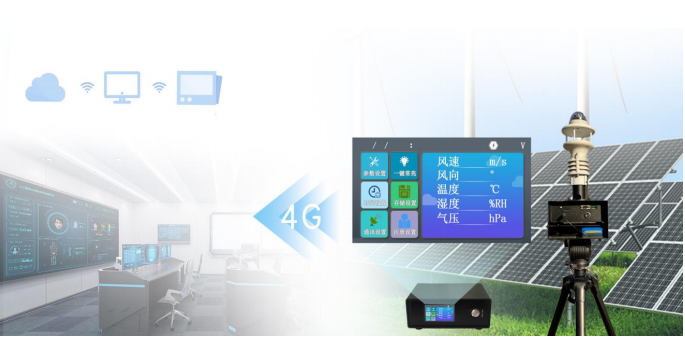
Suzhou LAILX provides LXH506 with a complete set of original supporting services, with sensors, transmission modules, and cloud data platforms all independently developed and operated without third-party platform fees; National on-site installation training, annual free sensor calibration, lifelong free use of cloud platform, and synchronized firmware remote upgrade services. With the acceleration of the digital transformation of photovoltaic precision operation and maintenance, meteorological environment data has become an indispensable core basic data for smart management of power plants. The LXH506 portable meteorological station, with its flexible mobile deployment, precise collection of multiple elements, and intelligent cloud data management advantages, has built a mobile global meteorological monitoring network for photovoltaic projects, empowering photovoltaic power generation forecasting, operation and maintenance optimization, and quality evaluation with accurate environmental data, promoting the comprehensive upgrade of digital and precision operation and maintenance in the photovoltaic industry.
+86 177-0622-2370
Address: 4409 Wuzhong Avenue, Suzhou City, Jiangsu Province
Phone: +86 17706222370
Email: el@lailx.com

LINE