Welcome to LAIXL, producing EL testers, IV testers, and drone EL
 ×
×
+86 177-0622-2370
xinwen
浏览数:990 发布于:2026-05-06
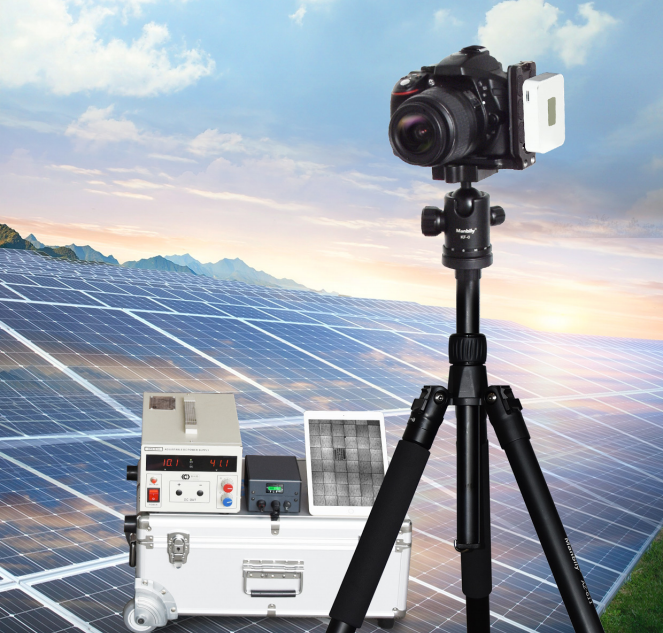 During the long-term operation of photovoltaic power plants, internal hidden defects such as module cracking, grid breakage, virtual soldering, and PID decay are the core "hidden killers" that lead to decreased power generation efficiency, accelerated power decay, and frequent hot spot faults. These defects are unrecognizable to the naked eye and difficult to detect through routine inspections. Long term accumulation will seriously shorten the service life of components, reduce the overall revenue of the power station, and even cause safety accidents such as short circuits and fires. The EL detector, as the core equipment for detecting internal defects in photovoltaic modules, can visually display the distribution and severity of defects inside the modules through electroluminescent imaging technology. It is a "key defense line" for controlling module quality and maintaining power plants. Suzhou Laikesi New Energy Technology Co., Ltd. (LAILX) focuses on the pain points of hidden defect detection in photovoltaic modules and innovatively develops the LXG30 portable EL detector. With advantages such as efficient detection, accurate imaging, and portability, LAILX has become a "mobile health inspector" for photovoltaic power plant operation and maintenance, providing escort for the high-quality development of the photovoltaic industry.
The generation of internal defects in photovoltaic modules runs through the entire process of production, transportation, installation, and operation: During the production process, defects in the cutting and welding processes of solar cells can easily lead to hidden cracks and broken grids; During transportation and installation, external forces such as collision, compression, and bending can easily cause hidden damage to components; During long-term outdoor operation, factors such as temperature differences, wind erosion, and voltage stress can exacerbate defect propagation, resulting in PID attenuation, hot spots, and other faults. Traditional EL detectors are mostly large fixed equipment with a large volume, complicated deployment, and dependence on external power sources. They are only suitable for laboratory or fixed factory testing and cannot meet the on-site testing needs of outdoor photovoltaic power plants such as mountains, deserts, and rooftops. At the same time, some portable devices have problems such as blurred imaging, low defect recognition accuracy, and slow detection efficiency, which are difficult to meet the needs of efficient operation and maintenance of large-scale power plants. In response to industry pain points, the LAILX LXG30 portable EL detector has been comprehensively upgraded from three dimensions: imaging technology, portable design, and intelligent operation, providing efficient and accurate solutions for detecting hidden defects in photovoltaic modules.
Imaging performance is the core competitiveness of EL detectors. The LXG30 is equipped with a high-resolution infrared imaging chip and a professional grade infrared lens, with an imaging resolution of 25 million pixels and support for 4K high-definition imaging. It can clearly capture micro scale hidden cracks, fine broken grids, virtual soldering and other small defects inside the components. The imaging quality is delicate, the defect boundaries are clear, and the problem of defect omission and misjudgment caused by blurry imaging is avoided. The device adopts patented infrared focusing technology, which focuses quickly and accurately without the need for manual repeated debugging, ensuring imaging clarity at different distances and angles. At the same time, the built-in intelligent imaging algorithm can automatically optimize image contrast and brightness, filter ambient light interference, and even present clear and stable imaging effects under complex lighting conditions such as strong and weak light, adapting to outdoor all-weather detection needs. Whether it is subtle hidden cracks or local virtual welding or broken gate defects, they can be visually presented, providing reliable guarantee for accurate defect identification.
Portable design makes outdoor testing more flexible and efficient. The LXG30 adopts a lightweight integrated design, with a lightweight main unit and a retractable aluminum alloy tripod and high-strength protective box. The tripod can be quickly folded and stored, and the protective box is earthquake resistant and fall resistant, making it easy to carry to various outdoor power plant sites. A single person can easily carry, deploy, and store equipment without the need for additional manpower, greatly reducing the difficulty of outdoor operations. The device is equipped with a high-performance imported lithium battery with strong endurance. It can support continuous testing for more than 8 hours on a single charge, without relying on external power sources, completely solving the power supply problem in remote power stations and scenarios without power supply. The deployment process is minimalist, with equipment setup, debugging, and component docking completed within 5 minutes of unboxing, and imaging detection of individual components completed in 30 seconds. Compared to traditional equipment, the detection efficiency is increased by more than 5 times, making it suitable for large-scale power plant batch detection needs. In limited space scenarios such as rooftop distributed power stations and mountain power stations, the LXG30 can flexibly shuttle and easily complete detection operations, breaking the scene limitations of traditional equipment.
Intelligent operation and data management help upgrade the efficiency of operations and maintenance. LXG30 supports wireless control of tablet computers. Through a dedicated EL analysis app, the device can be remotely controlled for imaging, focusing, and shooting, and high-definition imaging results can be viewed in real time without the need for close range operations, improving job safety and convenience. The APP has a built-in intelligent defect recognition algorithm that can automatically mark the location of defects such as hidden cracks, broken grids, and virtual welding, generate defect analysis reports, and support one click export of PDF and Excel format files for easy data archiving, sharing, and traceability. At the same time, the device supports synchronous imaging of multiple components, which can simultaneously complete the shooting task of 1-2 components, further improving the efficiency of batch detection. The Chinese and English operation interface is simple and intuitive, with clear functional layout. Novices can quickly get started without professional training, reducing the threshold for device use. In addition, LXG30 can be used in conjunction with unmanned aerial vehicle inspection systems to achieve automated cruise detection of large-scale power plants, creating a "ground+air" three-dimensional operation and maintenance system, and assisting in the intelligent upgrade of power plant operation and maintenance.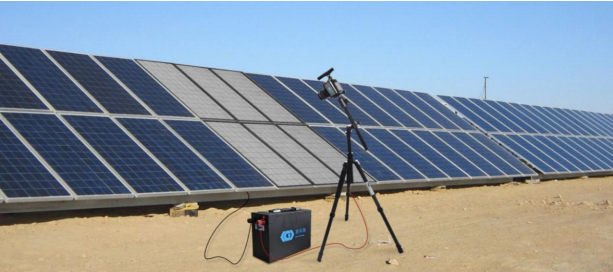
With excellent performance and wide adaptability, the LXG30 portable EL detector has played an important role in photovoltaic module production quality inspection, power station acceptance, daily operation and maintenance, fault troubleshooting and other scenarios. In the component production process, it can be used for quality inspection before leaving the factory, accurately identifying process defects, and ensuring the quality of components leaving the factory; During the acceptance stage of the power station, hidden defects in components can be comprehensively investigated to prevent defective components from being connected to the grid and ensure the quality of power station construction; In daily operation and maintenance, regular EL testing is carried out to promptly detect and handle hidden defects, prevent defect expansion from causing larger failures, and ensure the long-term efficient operation of the power station.
Suzhou LAILX has been deeply involved in the field of photovoltaic testing for many years, always focusing on "solving industry pain points and creating customer value". The launch of LXG30 portable EL detector is the result of the deep integration of enterprise technological innovation and industry demand. In the future, LAILX will continue to uphold the concept of "focus, innovation, and professionalism", continuously increase research and development investment, optimize product performance, improve product matrix, provide more efficient, accurate, and intelligent detection solutions for the photovoltaic industry, and help promote the healthy and sustainable development of the global photovoltaic industry.
+86 177-0622-2370
Address: 4409 Wuzhong Avenue, Suzhou City, Jiangsu Province
Phone: +86 17706222370
Email: el@lailx.com

LINE